A Simulation Example
The best way to understand how the simulation works is to walk through an example. Let’s consider a simulation projecting 5 years into the future. We will execute 1,000 independent runs, using the last 5 years of historical data as the statistical basis for our returns.
When you initiate this process, Stock Rover performs 1,000 separate simulations, each projecting a potential 5-year path for your portfolio. The tool operates on a monthly basis, generating random returns for each of the 60 months in the future period. These returns are derived from monthly data within the selected historical window, shaped by additional parameters like your Bullishness/Bearishness settings.
Note that 1,000 runs provide a high statistical confidence level. While increasing the number of simulations provides more data points for extrapolation, 1,000 is generally sufficient to yield meaningful, stable results without excessive computation time.
For every month in each of the 1,000 simulations, the following 8-step algorithm is executed:
- Sentiment Determination: Based on your Bear vs. Bull settings, the algorithm determines if the month should sample a positive or negative market environment.
- Historical Selection: A random month is selected from the historical period where the S&P 500’s return sign (positive or negative) matches the sentiment from Step 1.
- Ticker Sampling: Dividend-adjusted returns are sampled for each ticker based on the historical month identified in Step 2.
- Surrogate Mapping: If a specific ticker did not trade during that historical month, the return of a designated surrogate ticker is used instead.
- Inflation Adjustment: The projected return is reduced by the specified inflation rate.
- Value Adjustment: Each holding’s value is updated based on its calculated monthly return percentage.
- Rebalancing: If the simulation reaches a scheduled rebalancing interval, holdings are realigned to their target weights.
- Cash Flow Processing: Any scheduled withdrawals or contributions are processed equitably based on current holding weights.
In this example, Stock Rover generates 1,000 simulated portfolio paths spanning 60 months. The monthly returns for each simulation are calculated based on the weighted size of each ticker relative to the total portfolio.
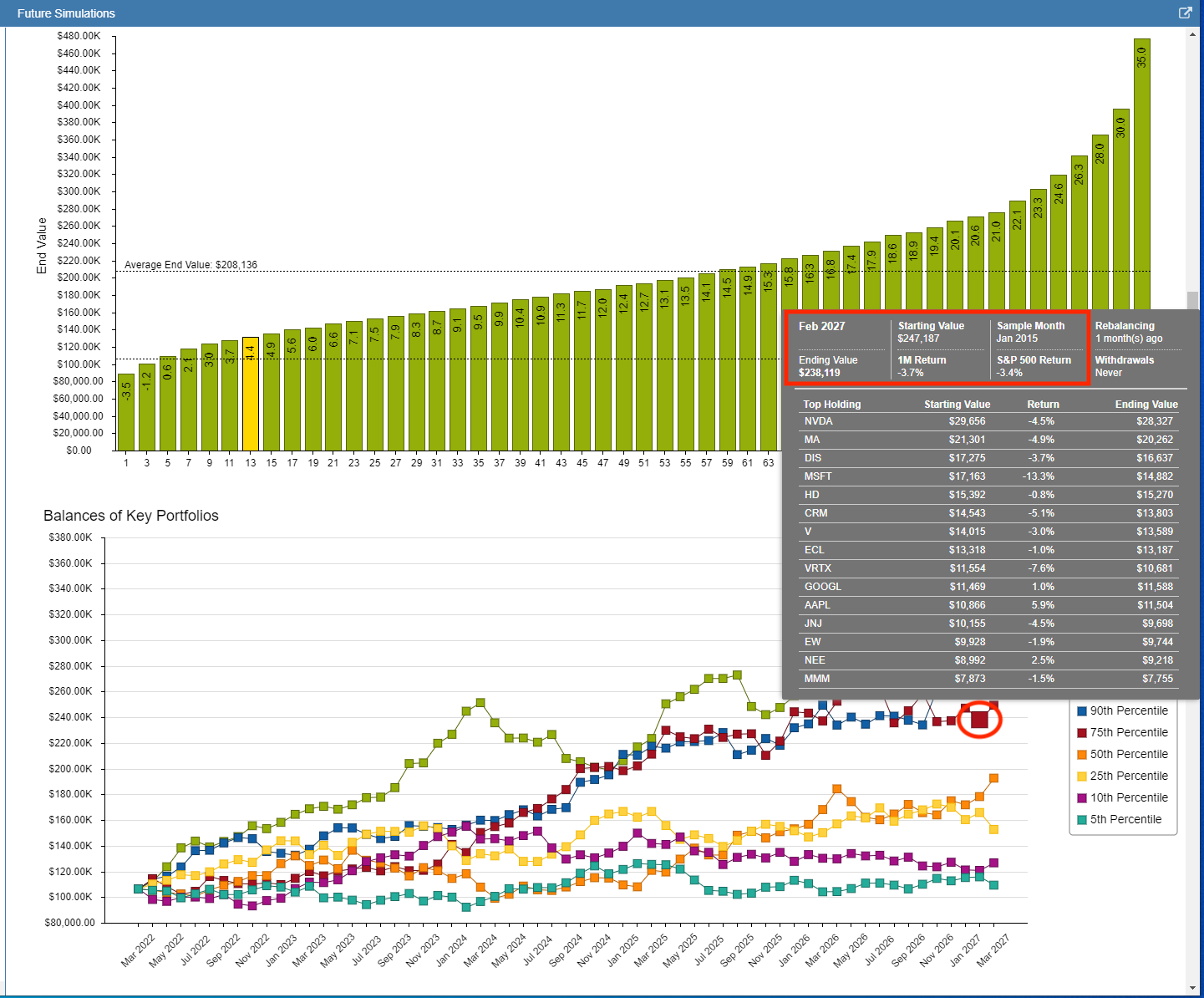
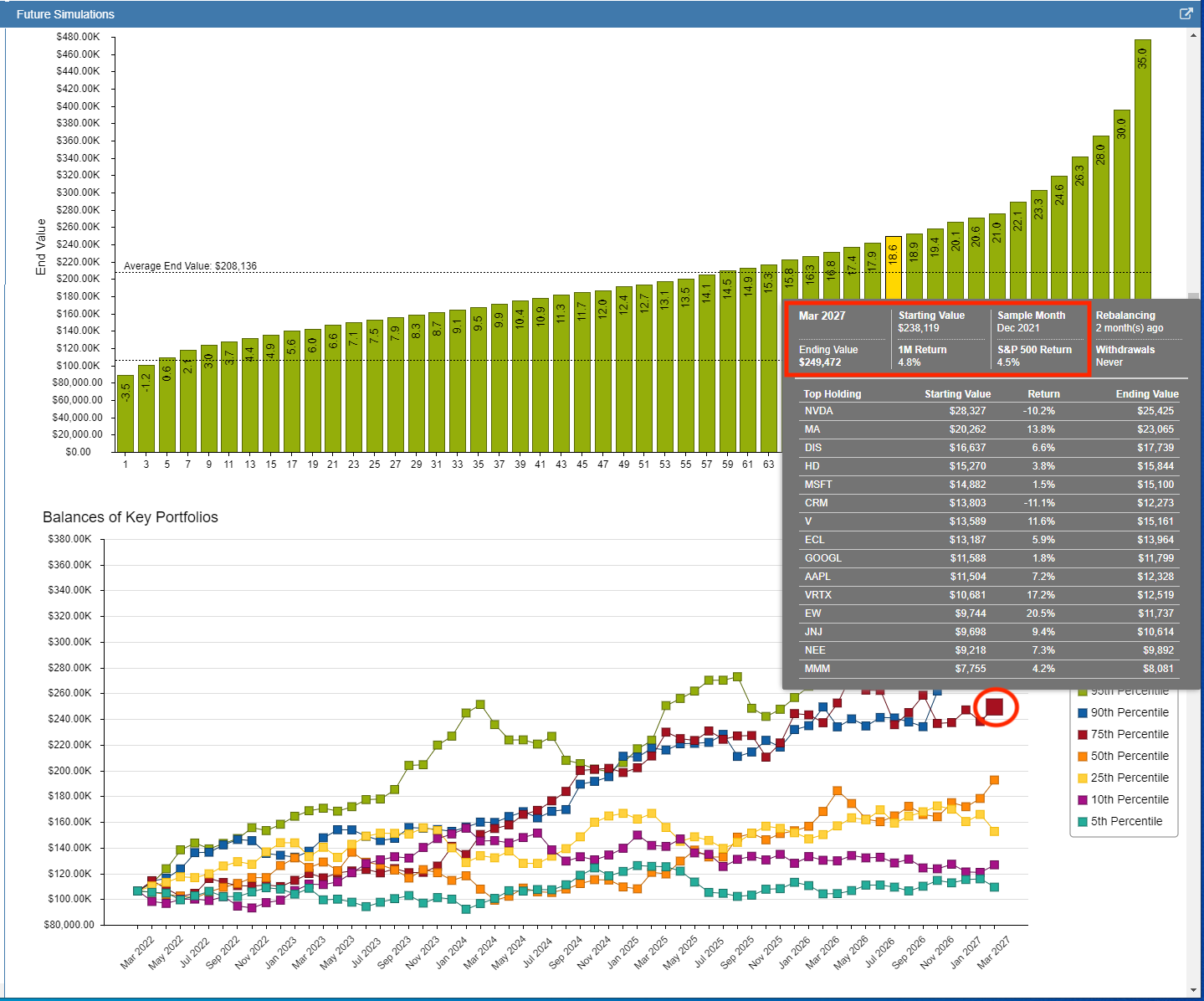
Below, we see two consecutive months from a simulation as displayed in the Balance of Key Portfolios chart. By using the tooltip, we can examine a specific path: February 2027 shows a negative return (sampled from January 2015), while March 2027 shows a positive return (sampled from December 2021).